

Why Ingest Slack Data?
Capture Tribal Knowledge
Answers buried in Slack threads become searchable knowledge
Trusted User Filtering
Only index threads answered by experts or senior team members
Keyword Filtering
Include or exclude threads based on specific words
Auto-Sync
Backfill jobs automatically import new conversations on a schedule
What Gets Indexed
Setup
Step 1: Create a Slack App
1
Create New App
- Go to Slack API Apps and click Create New App
- Select From scratch
- Enter a name (e.g., “Gurubase Backfill”)
- Choose your Slack workspace
- Click Create App
2
Add Bot Permissions
Go to OAuth & Permissions → Bot Token Scopes and add:
3
Install to Workspace
- Go to Install App page
- Click Install to [Your Workspace]
- Complete the OAuth flow
- Copy the Bot User OAuth Token (starts with
xoxb-)
Step 2: Connect to Gurubase
1
Navigate to Slack Integration
Go to Gurubase Dashboard → Select your Guru → Integrations → Ingestions → Slack
2
Enter Bot Token
Paste your Bot User OAuth Token and click Connect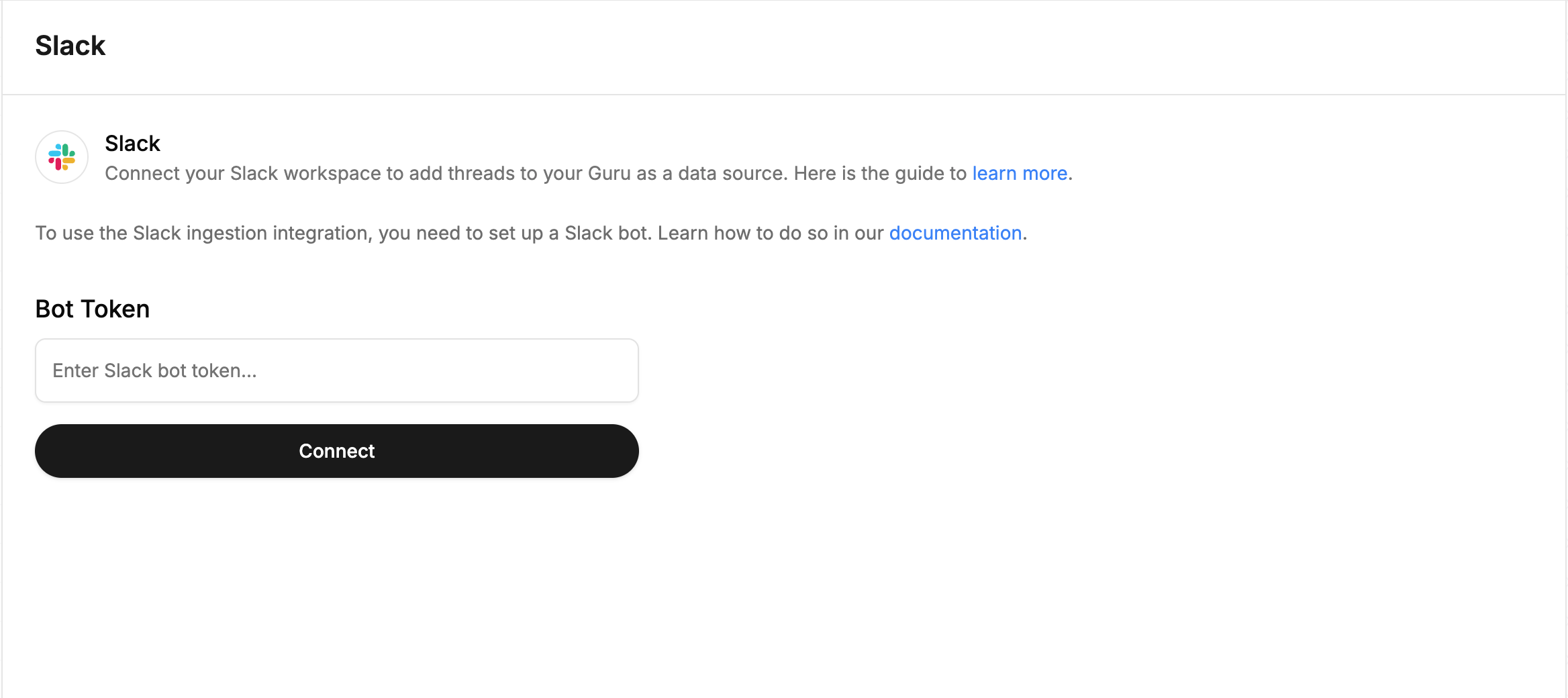
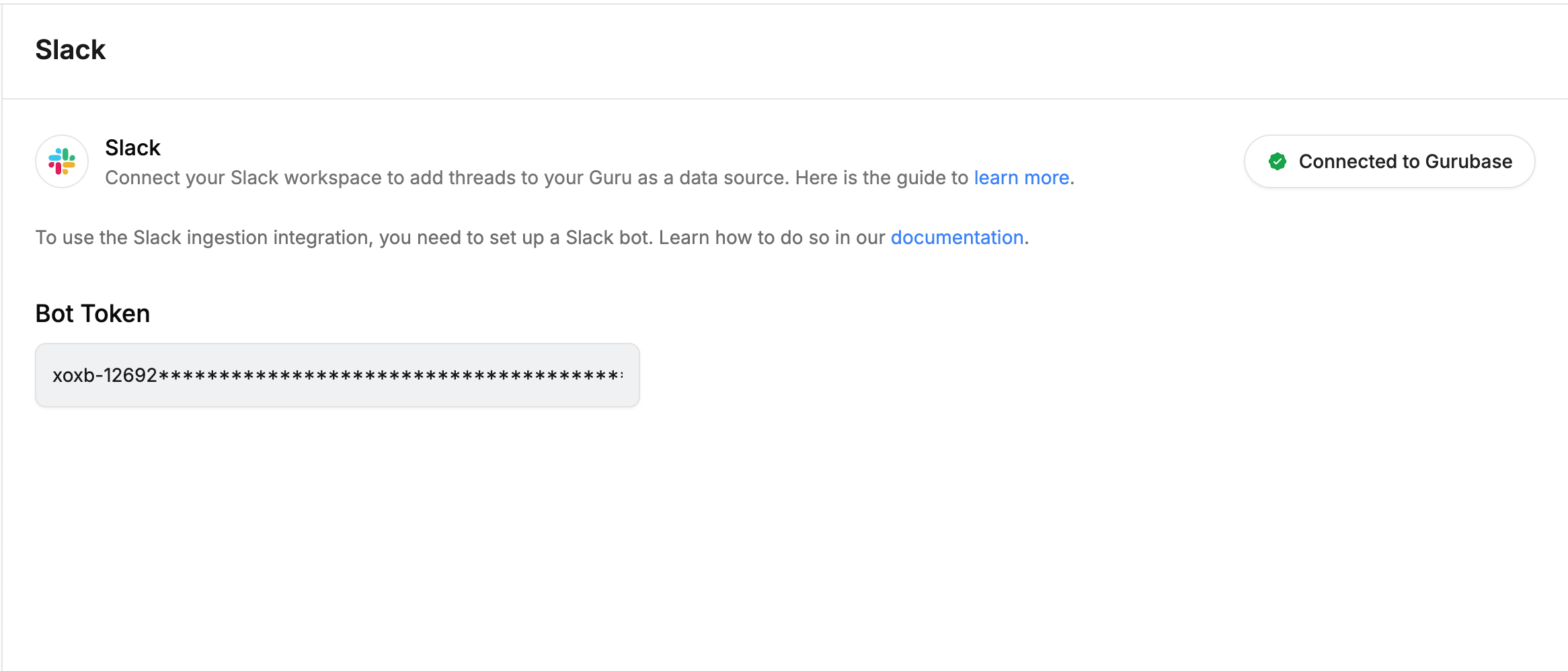
3
Create Backfill Job
Go to your Guru’s Settings → Add → Slack to configure a backfill job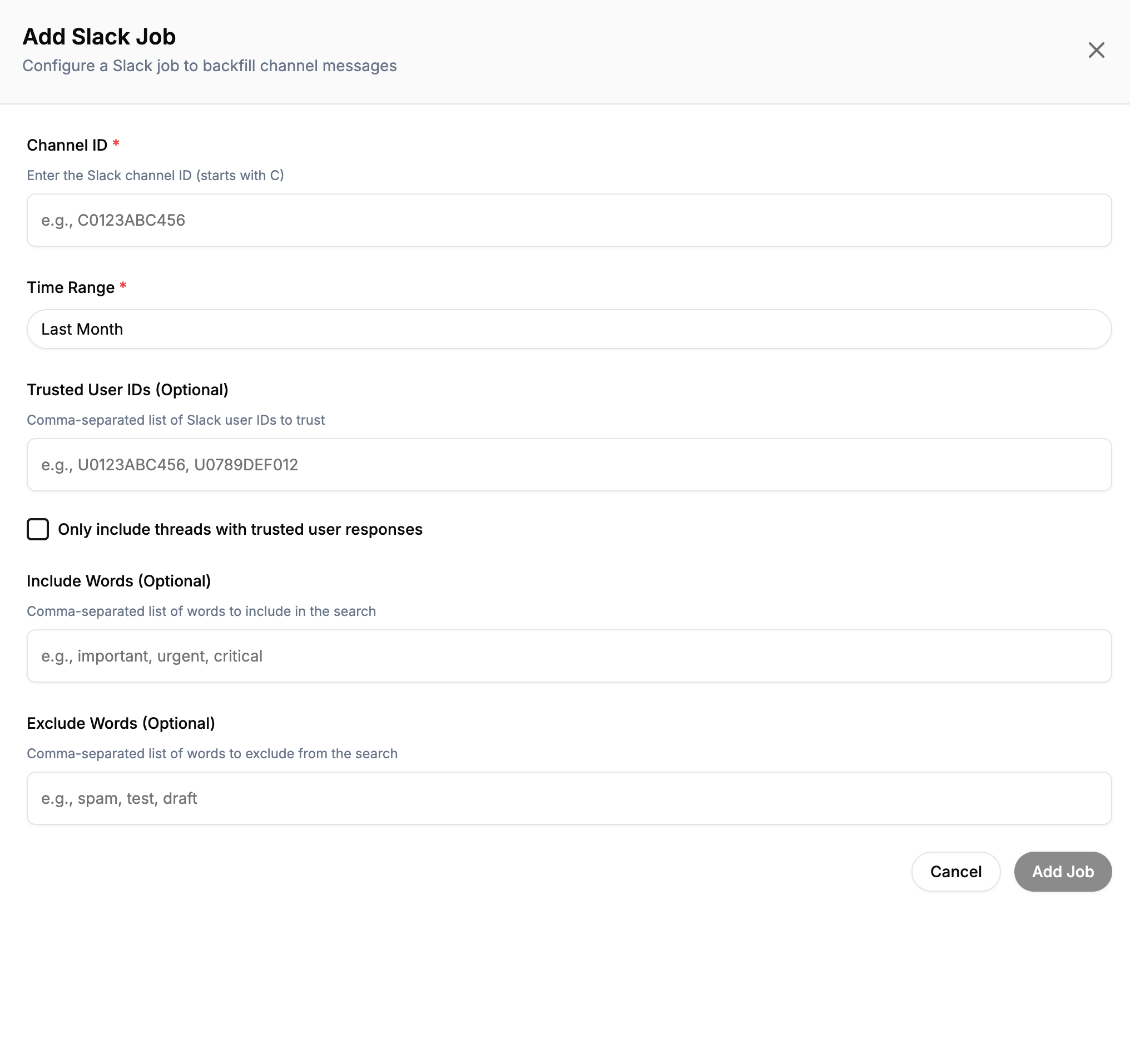
Configuring a Backfill Job
Public vs Private Channels
Public channels work out of the box. The bot automatically joins the channel when you create a backfill job. Private channels require an extra step: you must manually invite the bot to the channel before creating the backfill job. In Slack, open the private channel and type:@YourBotName with the name of your Slack app (e.g., @Gurubase Backfill). Without this, the bot cannot access the channel’s message history.
Finding a Channel ID
Right-click on a channel → View channel details → The Channel ID is shown at the bottom of the modal.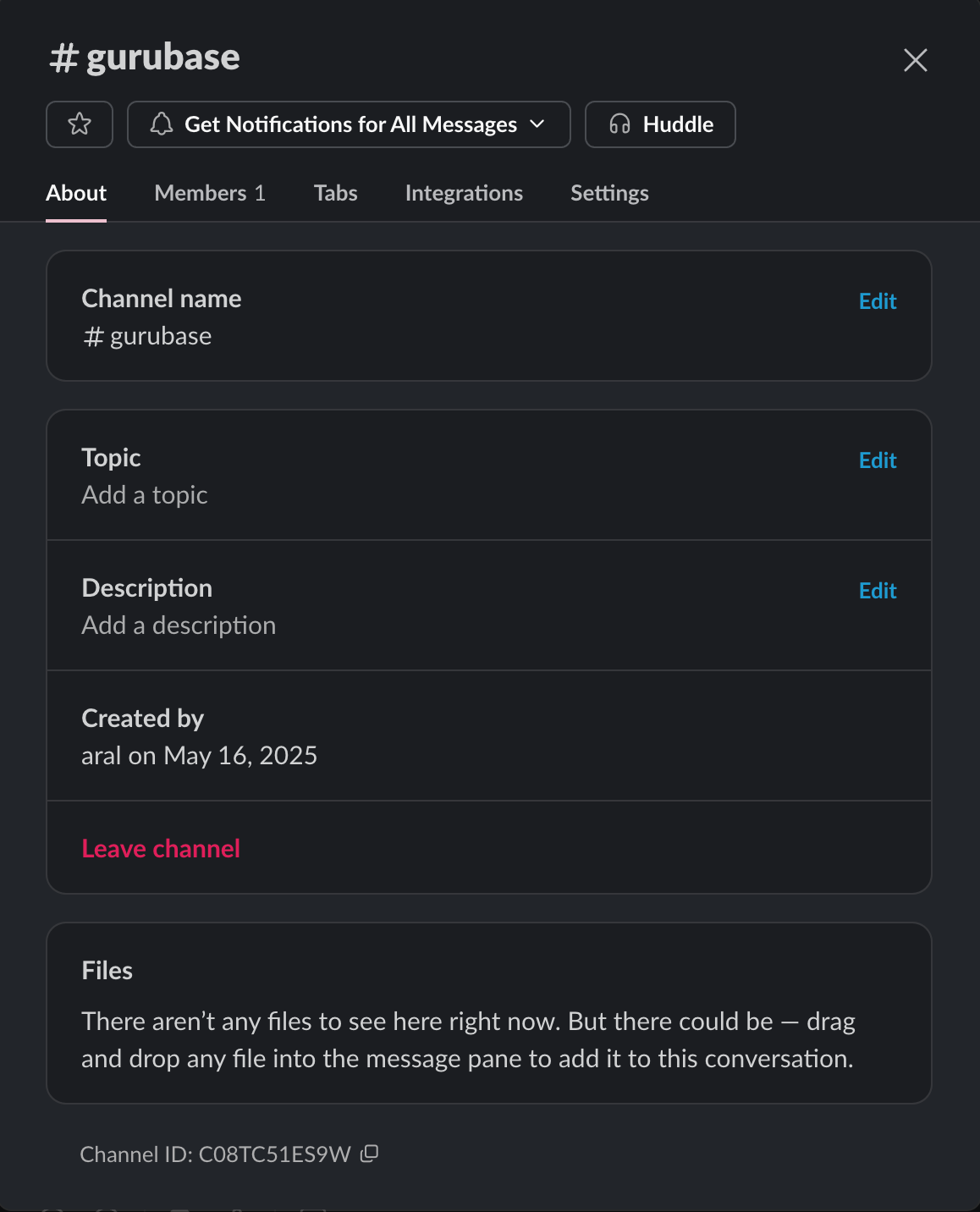
Finding a User ID
1
Open Profile
Open a DM with the user → Click their name → Click View full profile
2
Copy ID
In the profile sidebar, click the three dots (⋮) → Copy member ID
Next Steps

Slack Bot
Deploy Gurubase as a Slack bot for your team

Confluence Ingestion
Import Confluence pages

Jira Ingestion
Import Jira issues
Data Sources
Add more knowledge sources