

Why Ingest Jira Data?
Engineering Context
Past issues contain decisions, workarounds, and solutions that help answer new questions
JQL-Powered Selection
Use Jira Query Language to import exactly the issues you need
Attachments Included
Images, logs, and text files attached to issues are indexed too
Auto-Sync
Backfill jobs automatically import new resolved issues on a schedule
What Gets Indexed
Self-Hosted (Enterprise): This integration is in beta for selected users.
Cloud: Available to all users.
Setup
1
Create Atlassian API Token
- Go to Atlassian API Token settings
- Click Create API token
- Copy the token
2
Navigate to Jira Integration
Go to Gurubase Dashboard → Select your Guru → Integrations → Ingestions → Jira
3
Connect Your Jira
Fill in the connection details: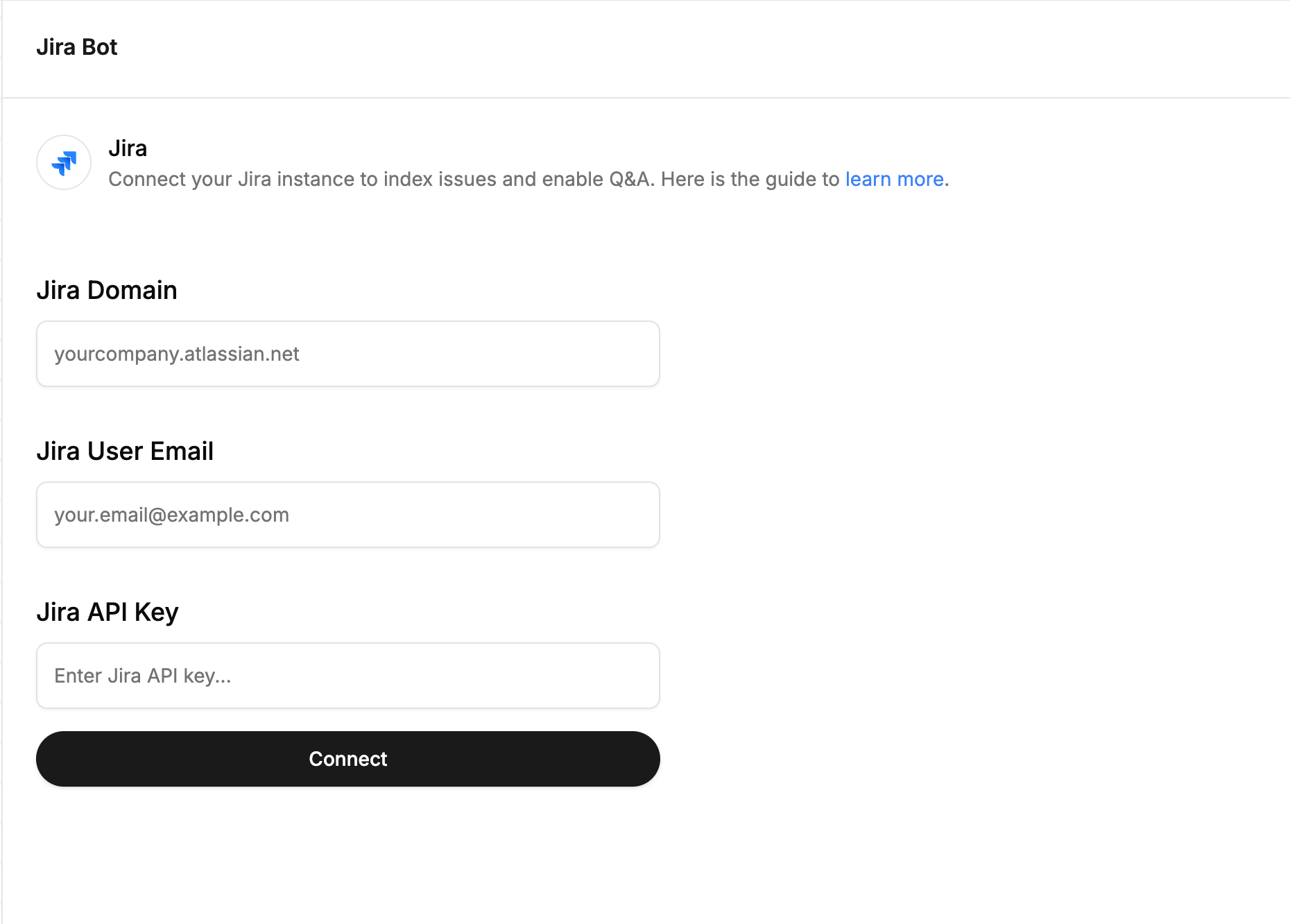
Adding Jira Content
After connecting, you can import issues in two ways: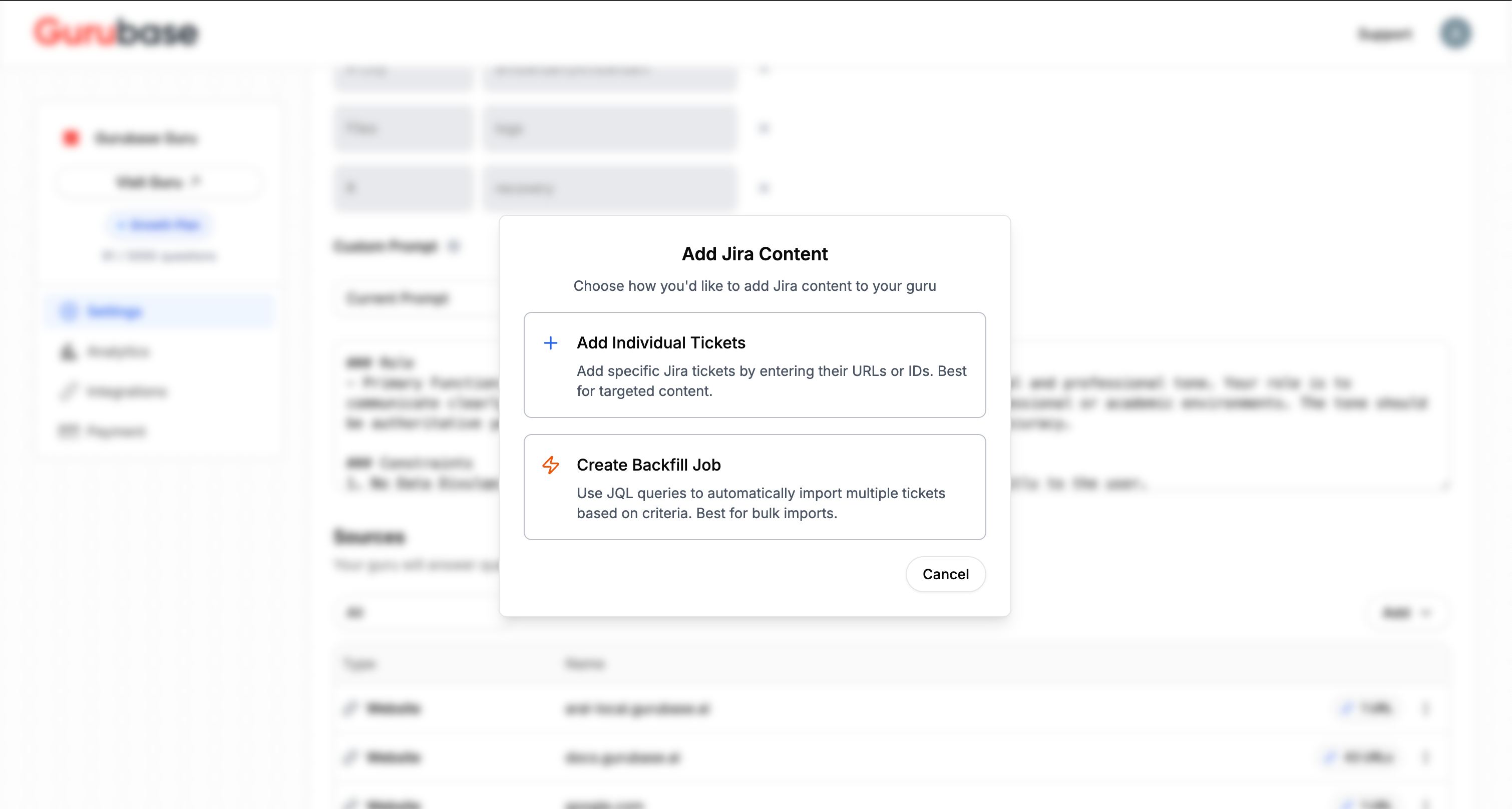
Option 1: Add Individual Issues
Best for importing specific issues by URL.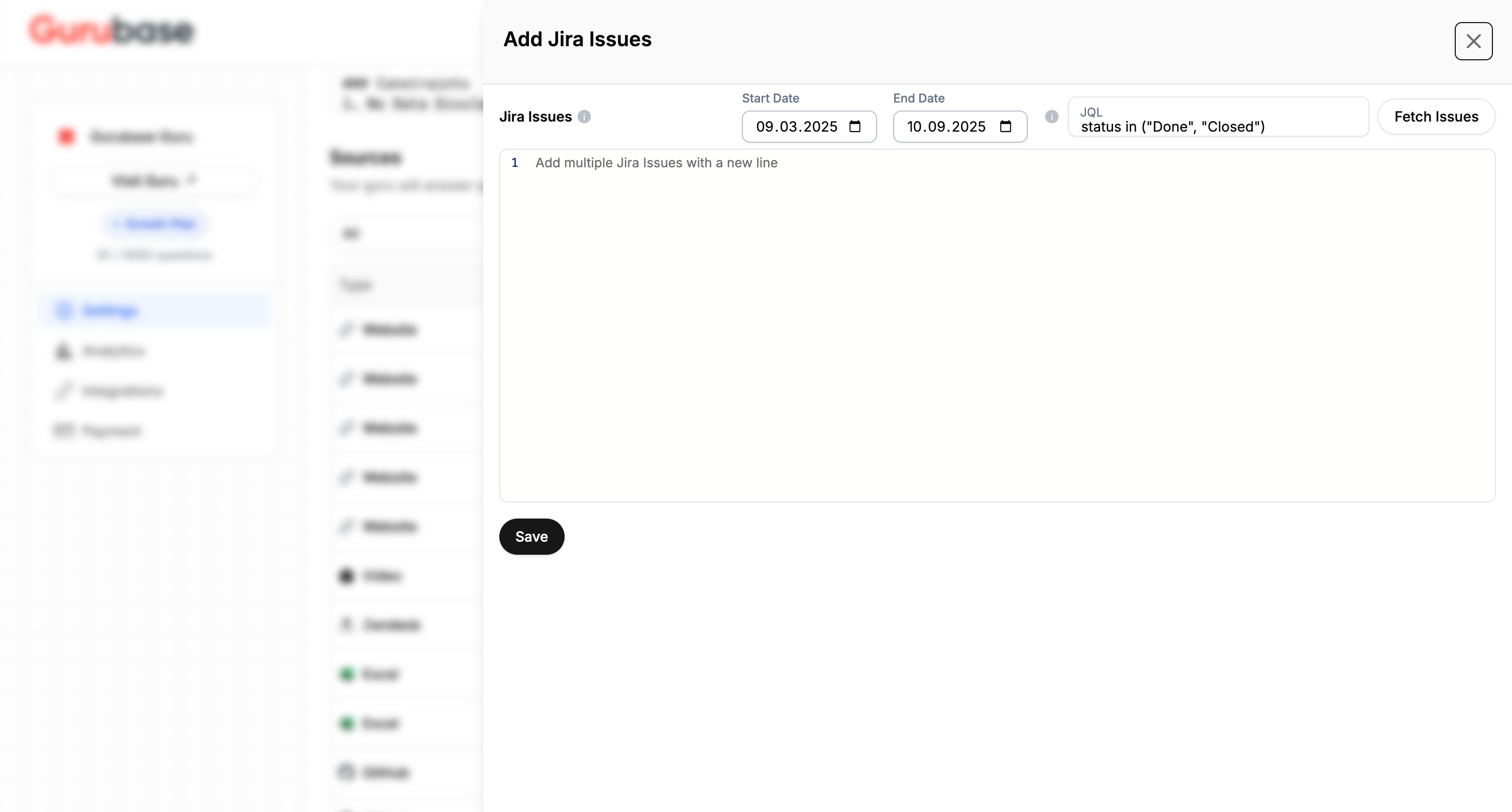
Option 2: Create Backfill Job
Best for bulk imports and automatic ongoing sync using JQL queries.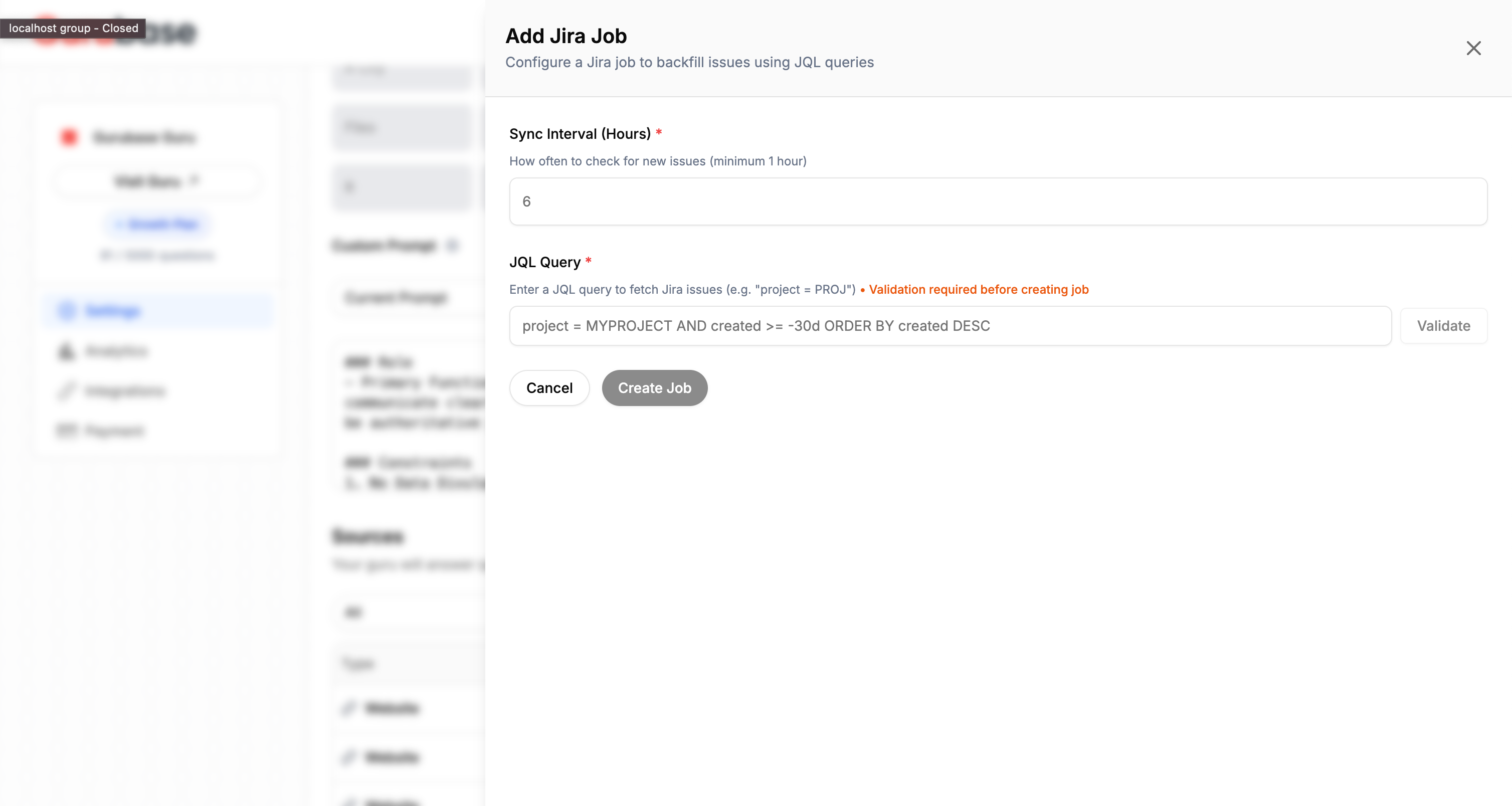
Example JQL Queries
Viewing Indexed Content
Imported issues appear as individual sources in your Guru’s data sources list. You can:- View the exact content that was indexed
- Remove specific issues
- Check when content was last synced
Next Steps

Jira Bot
Deploy Gurubase as a Jira bot for ticket responses

Confluence Ingestion
Import Confluence pages

Zendesk Ingestion
Import Zendesk tickets and articles
Data Sources
Add more knowledge sources